
 Stening



009 – Cordal Paralysis in Adduction
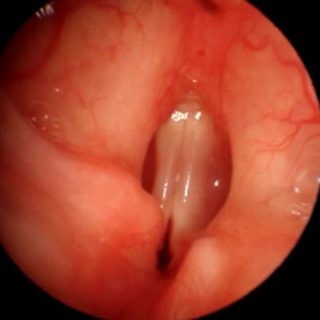
Bilateral chordal paralysis in adduction. It is the most frequent congenital paralysis and in 50% of the cases is associated with other neurological alterations The remaining 50% is idiopathic and reverses in the first year of life. (Hospital Pediatrics Juan P. Garraham).
008 – Thickening Cordal
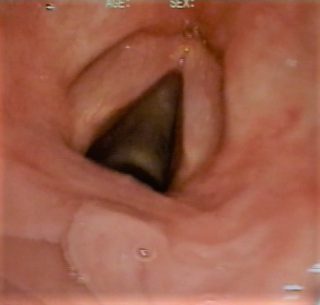
Bilateral thoracic thickening that seems to occlude the Morgagni ventricles.

006 – Throat thickening

Throat thickening and edema. Rugged appearance of the posterior commissure. Common finding in patients with reflux of gastroesophageal acid.
005 – The Larynx
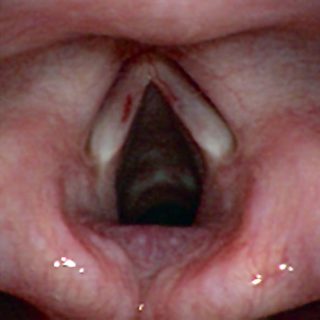
View of the larynx. The bronchoscope has been located in the midline, raising the free edge of the epiglottis and remains supported on its pharyngeal side. The vocal cords are in abduction. The first tracheal ring can be visualized through the glottic cleft.
004 – Strings in Abduction
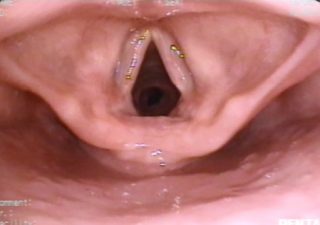
View of the normal laryngeal crown, with the vocal chords in an abduction position.
003 – The Larynx
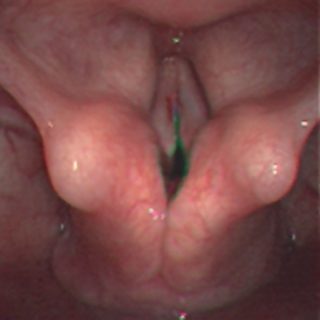
Larynx: it can be clearly seen the arytenoepiglottic folds and vocal cords in adduction. The edge of the left vocal cord isirregular in its middle third.